
There’s something quietly disarming about Way Back by Sara Cox. It doesn’t shout for attention or try to overwhelm you with drama. Instead, it unfolds in that familiar, bittersweet way that real memories do: a little messy, a little funny and often more meaningful in hindsight than in the moment itself.
Reading it felt less like being told a story and more like being let in on someone’s past, piece by piece, with all the awkwardness and warmth that comes with growing up.
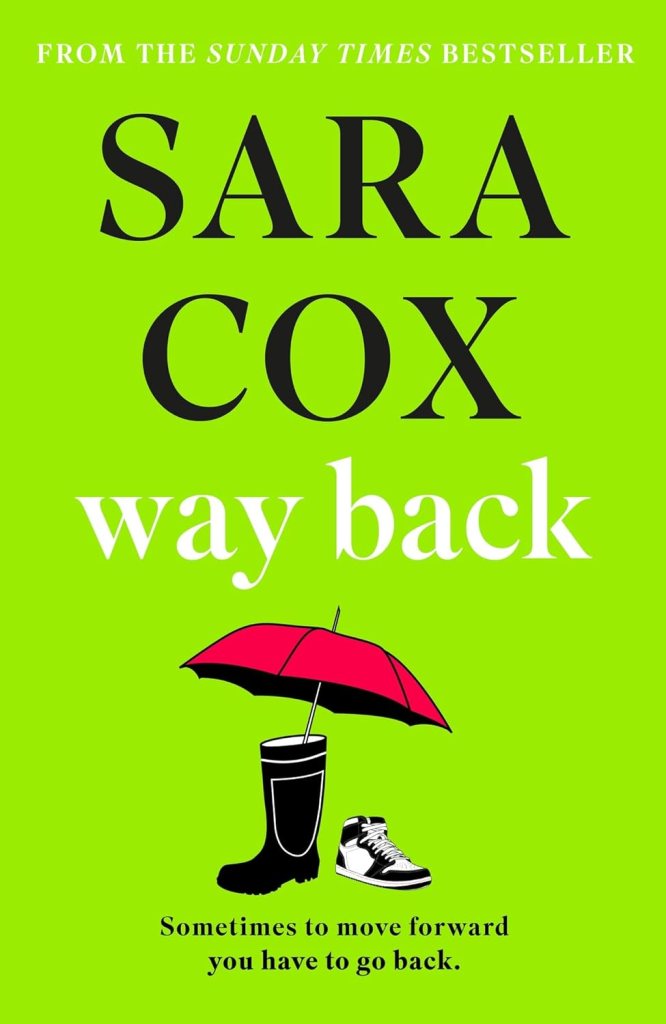
At its core, this story is about returning; physically, emotionally and mentally to a place you once belonged to. The novel follows Josie, who heads back to her hometown after many years away, carrying with her the kind of complicated baggage that doesn’t fit neatly into a suitcase.
What I found most engaging wasn’t just the premise, but how recognisable it felt. That idea of revisiting who you used to be and realising you can’t quite step back into that version of yourself. It is something the book handles with a lot of honesty.
The tone is one of the book’s strongest features. It balances humour and nostalgia in a way that feels natural rather than forced. There are moments that genuinely made me laugh (which were usually rooted in small, observational details rather than big comedic set pieces) and others that land more quietly, leaving you thinking rather than reacting immediately. It never tips too far into being overly sentimental, which I appreciated. Instead, it keeps a grounded, almost conversational feel throughout.
What stood out to me most was how well the relationships are captured; particularly the messy, layered kind you have with people who’ve known you forever. Friendships in this book aren’t idealised; they’re complicated, sometimes strained, but still meaningful. The same goes for family dynamics. There’s a sense that history lingers in every interaction, even when it’s not being openly discussed. That subtle tension adds depth without needing dramatic confrontations at every turn.
Josie herself is a compelling character, largely because she doesn’t feel overly polished or “designed” to be liked. She has flaws, blind spots and moments where she’s clearly avoiding things she should probably face head-on, which made her feel more believable to me. Instead of being a perfectly relatable protagonist, she’s someone you gradually understand, and sometimes agreeing with her choices, yet sometimes questioning them.
The setting also plays an important role, almost like another character. The hometown isn’t romanticised, but it’s not dismissed either. It’s portrayed as a place full of memories; some comforting, others awkward or painful. That mix gives the story a strong sense of atmosphere. You can feel the weight of familiarity in the places Josie revisits and how those spaces trigger reflections on who she used to be versus who she is now.

If there’s a central theme running through the book, it’s the idea that you can’t fully go back, however that doesn’t mean the past is irrelevant. Instead, it shapes how you move forward. I liked how the novel didn’t try to offer a neat resolution to that tension. It doesn’t suggest that returning home will fix everything, nor does it frame leaving as the only way to grow. It sits somewhere in between, acknowledging that both staying and going come with their own complications.
That said, the pacing might not work for everyone. It’s not a plot heavy book, and if you’re looking for constant twists or high stakes drama, this probably isn’t it. The story moves more through reflection and character interaction than through big events. Personally, I didn’t mind that because it suited the tone (and it was my reading in bed book)but I can see how some readers might find it a bit slow in places.
Another thing worth noting is how understated the emotional moments are. The book doesn’t always spell out what you’re supposed to feel, which I think works in its favour. It trusts the reader to pick up on the significance of certain scenes without over-explaining them. That approach makes the more impactful moments feel earned rather than engineered.
What I came away with, more than anything, was a sense of quiet recognition. This story isn’t trying to reinvent the genre or deliver a dramatic, life-changing message. Instead, it focuses on something smaller but arguably more relatable; the strange experience of looking back at your life and trying to reconcile it with where you are now. That’s something most people can connect with, even if their circumstances are completely different.
If I had to describe the book in one way, I’d say it feels honest. Not brutally so, but in a gentle, observant way that doesn’t exaggerate for effect. It captures the awkwardness of revisiting old versions of yourself, the comfort and discomfort of familiar places, and the complicated nature of long-standing relationships. It’s not perfect, but it doesn’t need to be, it works because it feels real.
Overall, Way Back is the kind of book that lingers quietly rather than making a big impression all at once. It’s reflective, character-driven and grounded in everyday experiences. While it might not appeal to readers looking for fast-paced storytelling, it offers something more subtle: a thoughtful exploration of memory, identity and the idea of home.
It’s the sort of story that makes you think about your own “way back”—not necessarily to return, but to understand how it’s shaped who you are now.



 annabelwrites.com
Leave a comment